
Close
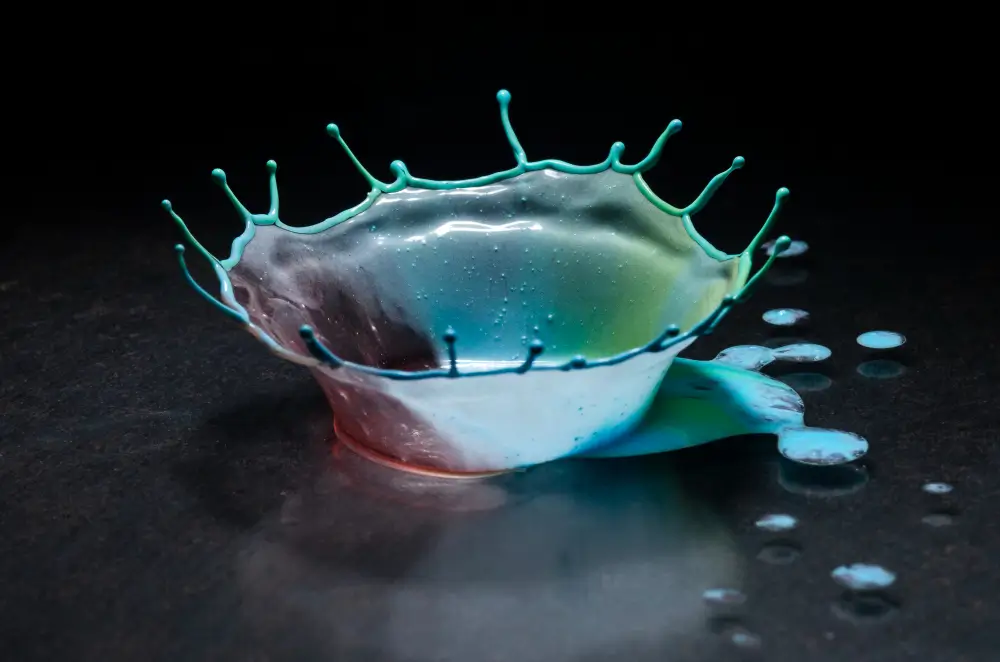
Even when your resin, pigment, and cure package are “correct, ” a coating can still fail for one frustrating reason: surface energy mismatch. The wet film can’t flow and wet the substrate uniformly, so it pulls away from tiny contaminants or trapped air—and defects appear. Three of the most common surface- defect families are: Craters: shallow, round depressions (often with a raised rim). Fisheyes: craters with a distinct “clean” center—classic signature of silicone/oil contamination. Pinholes: tiny holes that go down into the film, often from air/gas release or foam collapse.
The good news: in many systems, fluorinated wetting agents are one of the most reliable tools to prevent and repair these defects because they reduce surface tension hard, improve wetting, and stabilize flow before the film sets.
A crater/fisheye happens when a local spot has lower surface energy (e.g., oil, silicone, release agent, wax, skin oils). The coating retracts from that spot, creating a circular defect.
Common triggers
Pinholes are typically caused by entrapped air or gas release that doesn’t escape before viscosity rises / cure starts.
Common triggers
Fluorinated wetting agents have extremely low surface energy. In a coating, they help by:
They are not magic.If contamination is heavy (e.g., strong silicone release,oil pooling),you still need cleaning + process control.Think of fluorinated wetting agents as defect insurance—not a substitute for hygiene.
Because products vary (100% active vs pre-diluted),it’s best to dose on“active content”.Below are typical starting ranges used across many coating types:
Recommended starting ranges (as active matter on total formulation)
Best practice: run a ladder test: 0.03%,0.06%,0.10% active
Goal: distribute the wetting agent uniformly without creating foam.
For more details,please contact us: